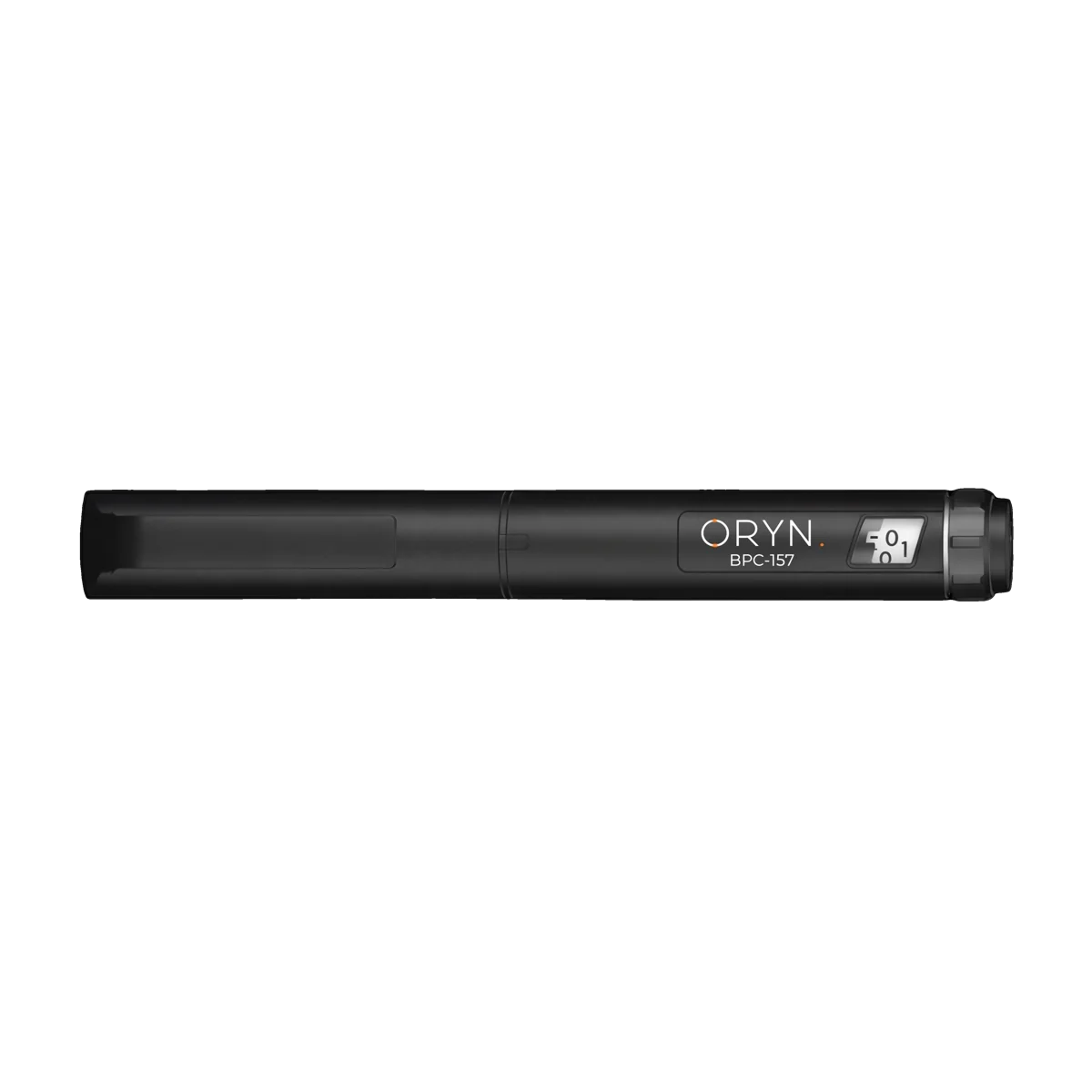
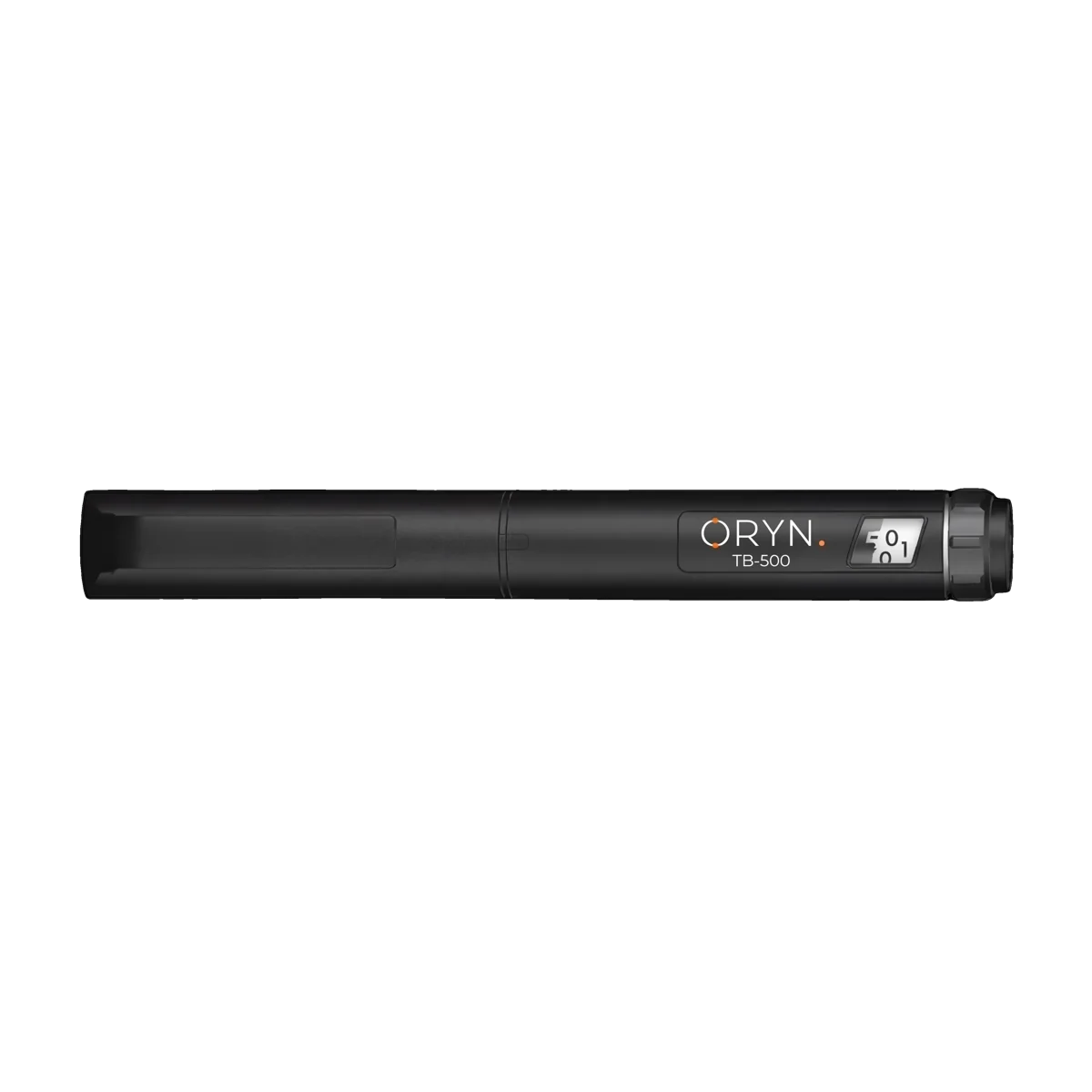
Traditional vial-based peptide supply uses a rubber stopper that a researcher pierces with a syringe needle every time a dose is drawn. Each puncture introduces a tiny amount of ambient oxygen into the vial headspace, and oxygen is the primary driver of peptide degradation: it oxidises disulphide bridges, opens peptide rings, and generates side-chain carbonyl products that show up as secondary peaks on an HPLC trace.
The ORYN pen cartridge solves this by sealing the solution inside a Type I borosilicate glass tube with a single chlorobutyl rubber plunger that only moves inward. The plunger never retracts, so oxygen never backfills. The result: our in-house HPLC stability data shows <5% peptide degradation over the full 30-day in-use window, compared with 15–40% degradation typical of an open vial over 14 days.
The second advantage is sterility. ORYN cartridges are 0.22 μm-filtered during fill (which removes bacteria and spores) and then gamma-irradiated at 15–25 kGy in their final packaging. Gamma sterilisation is the gold standard for medical-device terminal sterilisation because it penetrates the packaging without leaving chemical residues. Open-vial workflows rely on the researcher's aseptic technique for sterility — a well-documented source of contamination in the literature.
Finally, the mechanical dose calibration. The ratcheting screw-gear inside every ORYN pen is machined to ±0.01 mm tolerance, meaning the plunger travel per click is bounded by mechanical precision rather than researcher skill. Independent verification on a Bosch-type injection test rig shows <2% dose variance across 1,000+ simulated injections. A hand-drawn syringe dose averages ±8–12% variance — a 4–6× improvement in reproducibility.